
Private Harry Robertson, official number 2226, was born in Oaks Estate, Queanbeyan, in 1896 the eldest of seven children to Edward and Elizabeth Robertson. He was educated at Queanbeyan Public School and was a member of the St Stephens Presbyterian Church. After a preliminary medical examination and securing his parents’ signatures on 23 January 1916, he travelled to Goulburn to enlist. The name he wrote on his form was ‘Henry’ but that was changed to ‘Harry’. His profession was listed as ‘labourer’, and he was 19 years and two months. Harry was a good-looking lad, 150 lbs (68 kgs) and 5ft 8½ (174cm). The pride in having a soldier brother was clearly etched on the faces of his brother although his parents were seemingly less enamoured.
Robertson family (courtesy Pat Storen)
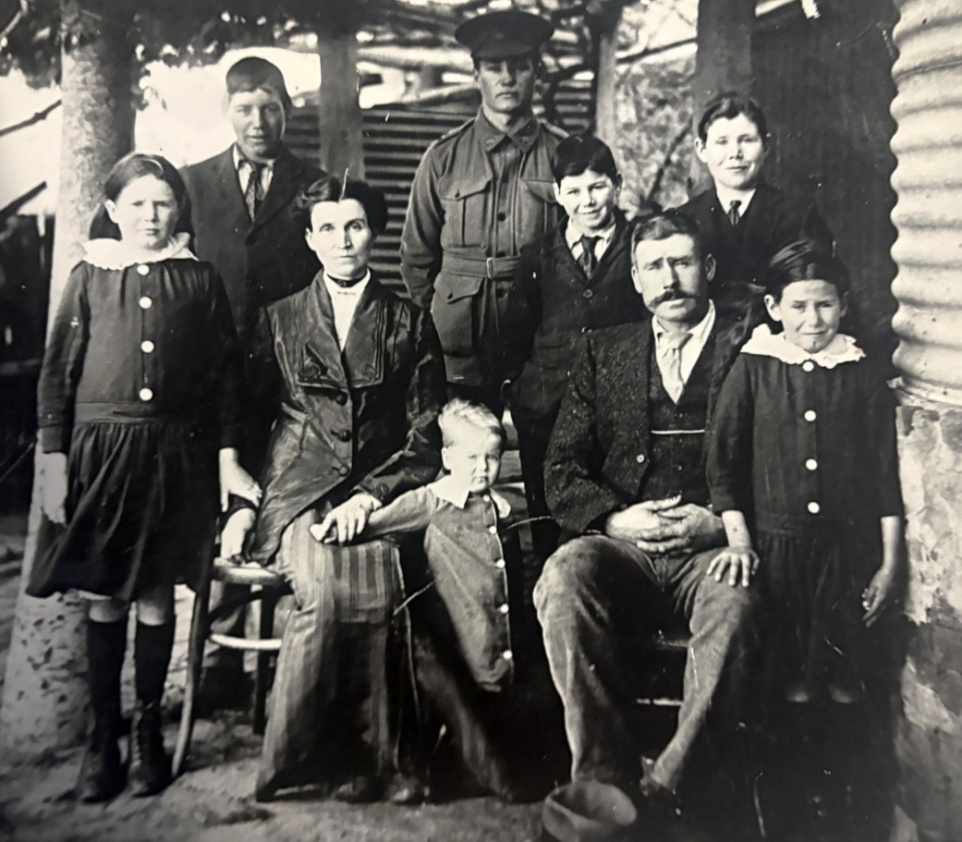
Initially attached to D. Company Goulburn AIF Camp, Harry was transferred to 4th Reinforcements 55th Battalion Australian Infantry Battalion and proceeded overseas on 4 September from Sydney. For a lad not yet 20 from humble origins to be on a ship travelling around the world was exciting. This was something he could never have dreamed of affording. Like those Australian teenagers travelling with him there was no inkling of what awaited, of the grim reality of war. Even the carnage on the blood-soaked shores of Gallipoli could never be appreciated through the black and white grainy newspaper images. Indeed, that failed campaign had already been transformed to legend, which encouraged others to enlist. For Harry and his fellows in khaki the excitement and awe were evident as the ship approached the misty shores of England, at Plymouth on 29 October 1916. This was the ‘motherland’, the nation of their King and which dominated their school textbooks. Leave granted in the ensuing weeks likely allowed Harry to catch a train to London, his eyes opened wide by the city spectacle.
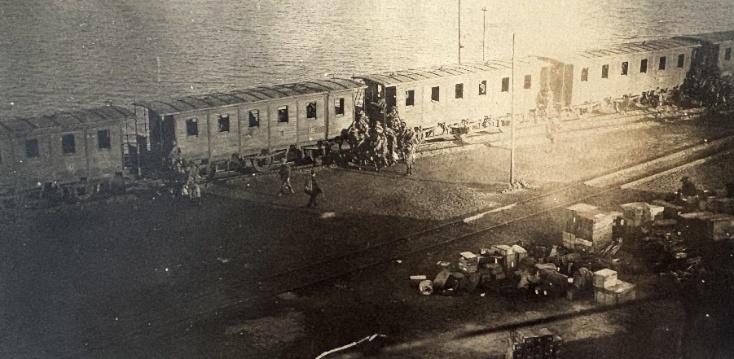
On 14 December Private Robertson was squashed together with other men wearing slouch hats onboard the Princess Henrietta floating across the English Channel. From there it was even more crowded trains before arriving on the Western Front.
The extended family in Queanbeyan were receiving a steady flow of postcards. Private John James Kitson was prolific because he was in love with ‘Lem’.
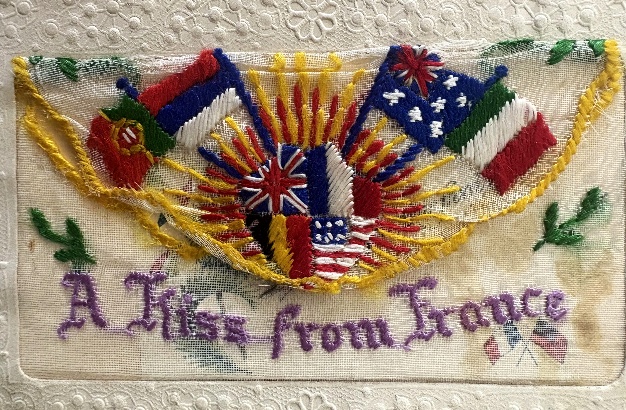
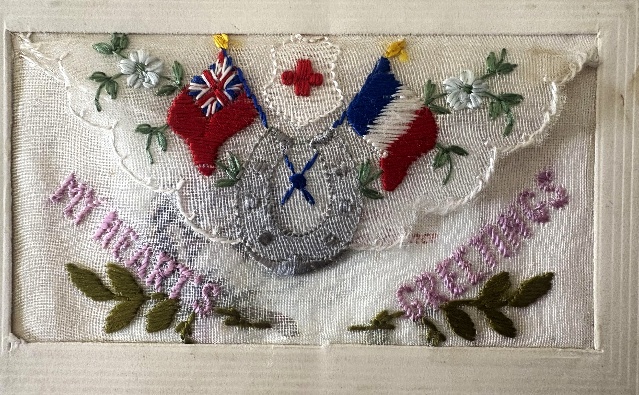
Although born in Hillston New South Wales, the family was living in Queanbeyan. John ‘Jack’ was 20 he joined in Cootamundra and also listed his occupation as ‘labourer’. He proceeded overseas on 5 September 1916 and joined the 2nd Australian Infantry Battalion as a driver on 18 September 1916. In September 1917 he was in England on leave then more leave in Paris before returning to the Western Front. Being back in the thick of the battle was affecting him and his postcard to his ‘Darling’ lamented not having heard from her although he admitted that news had come that mail from Australia had gone down in a ship.
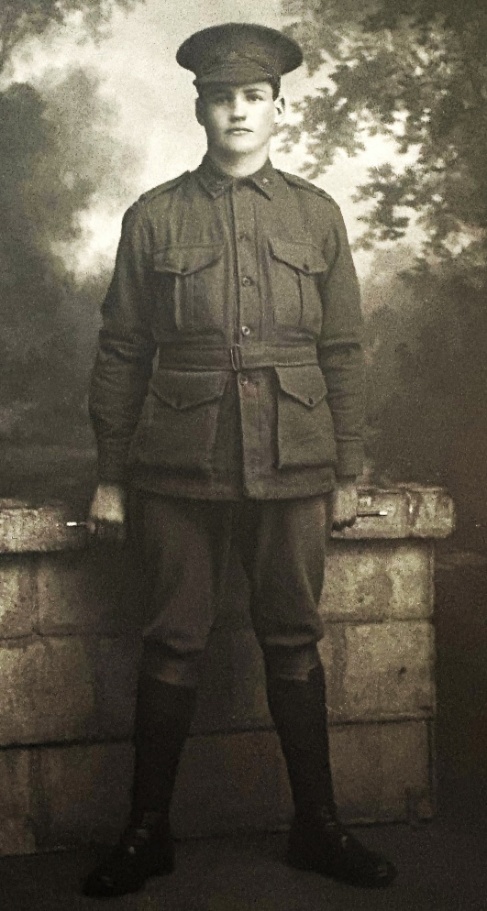
Private Harry Robertson
(courtesy of Pat Storen)
The next postcards before Christmas 1917 showed Jack was clearly suffering from ‘this terrible war’ and how he hoped ‘God’ would spare him. His correspondence became more anxious, and no space was left on the postcard dated 14 January 1918.
In March 1918 Private Jack Kitson was shot in the thigh, back and left buttock. He was rushed to the Casualty Clearing Station but died of his wounds on 18 March 1918. He was buried in the Outtersteene Communal Cemetery Extension Bailleul, Nord Pas de Calais, France.
Private Harry Robertson and the 55th Battalion were being subjected to mayhem. They had fought their first major battle at Fromelles in July; the battle was a disaster resulting in heavy casualties. In the freezing winter trenches in the Somme Valley, in early 1917 the 55th Battalion participated in the advance that followed the German retreat to the Hindenburg Line. On 1st April the battalion prepared to attack the village of Doifnies. At midnight they were in position on Sunken Road and rested until 4.25am at which time Harry and his unit moved forward.
Three companies including Harry’s middle company advanced, following the 56th Battalion. Unfortunately, at around 5.20am, another company disturbed a dog. The element of surprise was lost as its barking raised the alarm and rifle and machine-gun fire opened up from trenches and a nearby Beetroot Factory. The Australians continued their advance towards the village under withering gunfire. The village was captured as the sun rose on 2 April, but they were then subjected to bombardment from enemy artillery. Military Medals, and Military Crosses were awarded to members of the 55th Battalion for this as the result of this brave assault. Private Harry Robertson was not among them. He was killed on 2 April 1917.
On Sunday 6 May St Stephen’s Church, Queanbeyan, a memorial service was held with the Robertson family joining the large congregation listening to the clergyman speaking from in front of the Union Jack draped pulpit.
Those brave fellows … who are hazarding their lives on the great battlefields of France, are the truest patriots, since the truest patriot will, for the cause he has espoused, stake everything, even his very life. It was in such a spirit that Christ himself, the greatest Patriot the world has ever seen, lived and died, and, surely, that is the spirit which he must approve and love.
Harry’s modest few belongings were returned a year later; a metal wristwatch and strap (damaged), a prayer book, photos, cards, two discs, French notes to the value of 1 franc and 50 centimes. In December 1921 the family requested one dozen photos of his grave and dutifully enclosed a postal note and stamps to cover the cost. The following year they received photographs of the memorial cross erected on Harry’s grave. His father requested a pamphlet entitled Graves of the Fallen enclosing more stamps. In April 1923 Elizabeth requested a ‘mother’s badge’ also known as a ‘mourning badge’ only to be told the awarding of such had ceased. It seemed the government had decided mourning was over; mothers, families, mourned forever. Private Harry Robertson was buried in Lebucquiere Communal Cemetery, Arras, Nord Pas de Calais, France. Canberra’s Pat Storen visited France, her Great Uncle’s grave and walked in what remained of the fortifications in which Harry had stood, because she respected the service and sacrifice demanded of 20-year-olds like Private Harry Robertson.