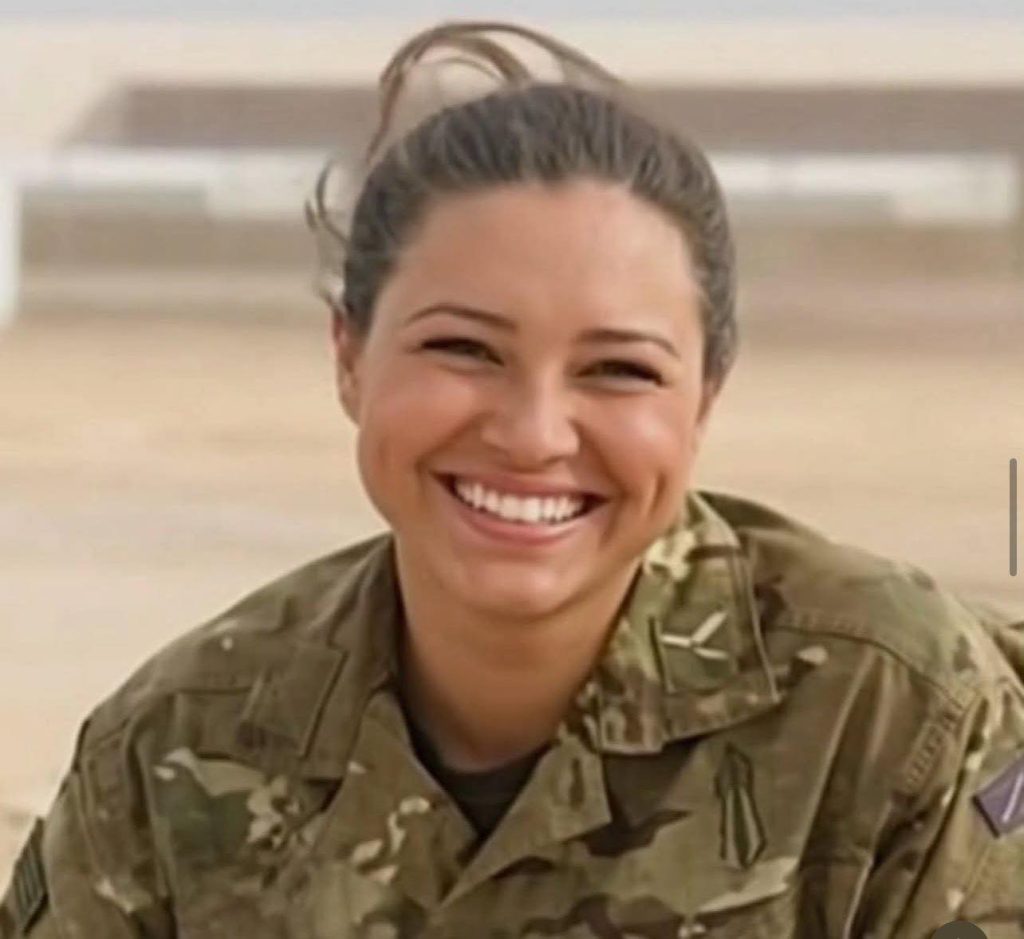
British Army Captain Lisa Jade Head told anyone within hearing distance that she had the ‘best job in the world’. Most of us would add ‘the most dangerous’. The 29-year-old had studied human biology at the University of Huddersfield which may have been either an odd or pertinent choice before joining the Royal Military Academy, Sandhurst. On graduation she served in Iraq and Afghanistan as an Air Transport Liaison Officer before transferring to 321 Explosive Ordnance Disposal Squadron. The ‘High-Threat Operators Course’ is one of the British Army’s most brutal but Lisa was successful with seniors describing her as professional, meticulous and with a razor-sharp wit and infectious personality; undoubtedly all necessary for anyone choosing to be an ordnance disposal expert. Lisa’s motto was ‘work hard, play hard’, and she served with distinction in Northern Ireland.
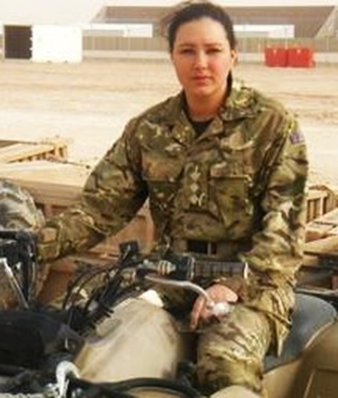
On 27 March 2011, Lisa deployed to Afghanistan as an ‘Improvised Explosive Device Disposal Operator’ with the Counter-IED Task Force based in one of the most lethal Afghanistan places, Patrol Base 4, Nahr-e-Saraj District, Helmand Province. —one of the most lethal zones in Afghanistan.
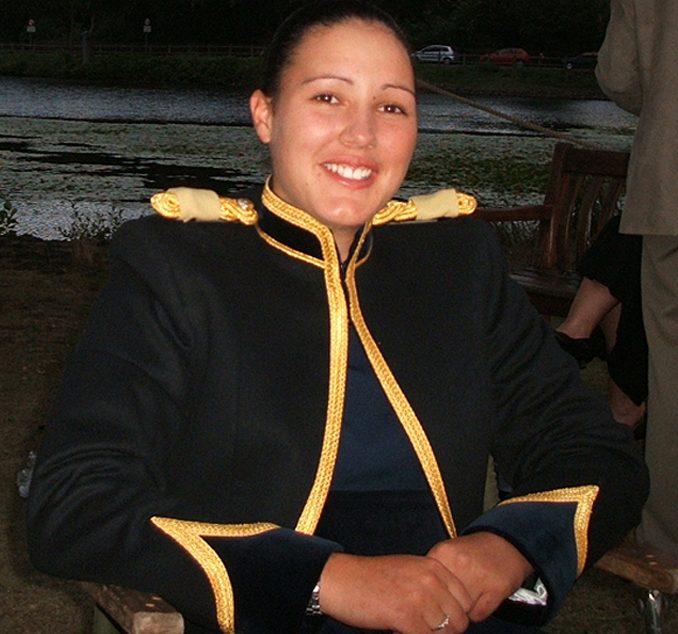
She went to work immediately defusing Improvised Explosive Devices (IEDs) which threatened not only fellow soldiers but civilians. Twenty-two days into her deployment Lisa and her team received an urgent call about a suspicious device in an Nahr-e-Saraj alleyway.
Dressed in her cumbersome heavy bomb disposal suit she approached and examined the IED. Having identified the trigger mechanism, the wiring and explosive components she defused it. The call came that there were additional devices nearby, a signature Taliban tactic, an IED cluster. Lisa defused the first. The IEDs had been positioned specifically to target a bomb disposal expert. The trap was impossible to avoid and the blast was catastrophic. Her team could but watch as Lisa was blown up and although realising that booby traps remained, they grabbed medical supplies and approached their leader. As the dust settled, they recognised that her injuries were appalling. Nine tourniquets and field dressings were applied in an attempt to stop the massive haemorrhaging. Lisa remained conscious the entire time but while her eyes were open and she was responsive she could not speak.
She was airlifted to Camp Bastion, then flown to Queen Elizabeth Hospital in Birmingham and her family raced to her bedside. Tragically her injuries were too severe, not only limb loss but head trauma and internal injuries. On 19 April 2011 the day after the explosion, Captain Lisa Jade Head died. She was given the dubious titles of the first female bomb disposal officer killed in action; the second British servicewoman killed in Afghanistan, and the 364th member of the British Armed Forces killed in that conflict.
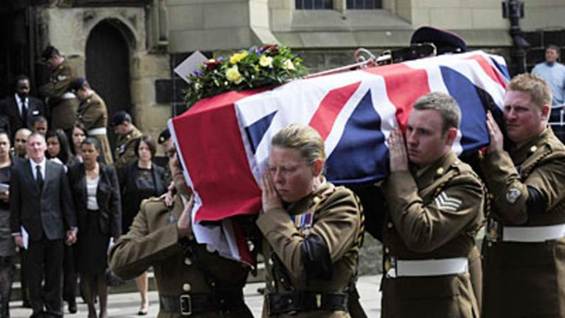
Some 1,000 people attended her full military honours funeral on 6 May 2011 at Huddersfield Parish Church with a guard from her regiment acting as pallbearers and lining the church steps. One fellow officer called her the most courageous woman I have ever met. Lisa’s commanding officer described her as; quite simply a joy to have known and a privilege to have commanded. Professionally she was the very best; a natural leader who commanded respect, she led from the front both at work and at play.
Her death underlined not only her own breathtaking courage but that of all bomb disposal personnel.